- What Is Shichi-Go-San?
- Why Choose Hie Shrine for Shichi-Go-San?
- The Nagomi Plan: What It Includes
- Ceremony Fees (Hatsuho-ryō)
- What Happens During the Ceremony
- Best Photo Spots at Hie Shrine
- Sample Day Schedule
- Celebratory Lunch: Hoshigaoka at Capitol Hotel Tokyu
- Practical Information
- Tips for International Families
What Is Shichi-Go-San?
Shichi-Go-San (七五三) is one of Japan’s most beloved childhood milestones. The name literally means “seven-five-three,” referring to the ages celebrated: girls at ages 3 and 7, and boys at ages 3 and 5. Families visit a Shinto shrine in November — traditionally on or around November 15 — to give thanks for their child’s healthy growth and pray for a bright future.
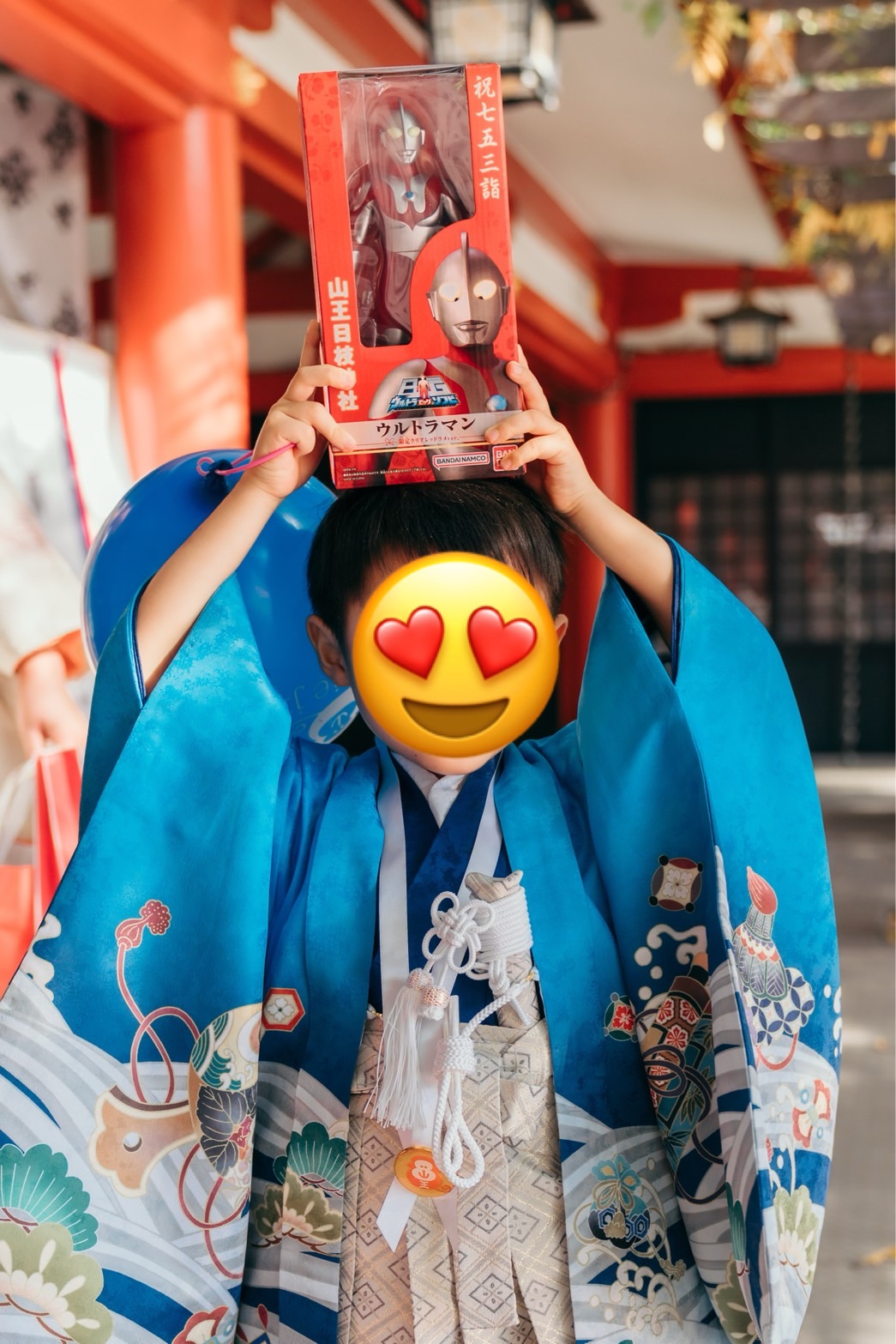
Children dress in formal kimono or hakama, making it one of the most visually stunning traditions in the Japanese calendar. You’ll see tiny kids in elaborate outfits walking carefully between stone lanterns, clutching chitose-ame (千歳飴) — long, red-and-white candy sticks symbolizing long life and good health.
For visiting families or Japan-based expats, Shichi-Go-San is a once-in-a-lifetime experience worth planning in detail.
Why Choose Hie Shrine for Shichi-Go-San?
Hie Shrine (日枝神社) sits in the heart of Tokyo, a short walk from Capitol Hotel Tokyu and the Akasaka business district. Despite its urban setting, it feels remarkably serene — a forested hilltop sanctuary with a famous tunnel of torii gates along the fox-lined Inari pathway.
During November, the shrine draws a steady stream of families for Shichi-Go-San blessings. On the weekday visit documented in this guide, there was a lively but manageable atmosphere: a mix of dressed-up children, their proud families, and a notable number of international visitors.
Key advantages:
- Central Tokyo location (Akasaka/Tameike-Sanno area)
- Popular with international visitors exploring the shrine grounds
- Unique seasonal photo spots including the goban (碁盤) ceremonial stepping stone
- The Nagomi Plan for families who want an all-in-one ceremonial package
- Proximity to Capitol Hotel Tokyu for a celebratory lunch
The Nagomi Plan: What It Includes
Hie Shrine offers the Nagomi Plan (なごみプラン), a weekday-only, fully pre-booked package that bundles everything into one seamless experience.
November pricing: ¥69,800
Included in the package:
- Kimono rental for your child
- Professional dressing (kitsuke)
- Hair styling
- In-studio photography session
This plan is ideal for families who haven’t arranged their own kimono or photographer. It removes the logistical burden and ensures professional results.
Important notes:
- Weekday only, advance reservation required
- November fills up fast — book early
- If your child already has a kimono and can be dressed at home, the standard ceremony (tsūjō kigan) is the alternative
In this family’s case, the Nagomi Plan was considered but ultimately skipped — their preferred time slot was unavailable, and their daughter could already wear her kimono from home. Both paths lead to a beautiful ceremony.
Ceremony Fees (Hatsuho-ryō)
For the standard blessing ceremony, you’ll pay hatsuho-ryō (初穂料) — a ritual offering fee.
- Amount: ¥10,000 and above (your choice)
- Payment: Cash only
- When to pay: At the reception desk upon arrival
There’s no fixed price — the tradition is to give what feels appropriate. ¥10,000 is the common starting point for family ceremonies.
What Happens During the Ceremony
The blessing ceremony at Hie Shrine follows a beautiful, structured format:
- Reception — Pay the hatsuho-ryō and receive your ceremony time
- Waiting area — A calm indoor space; good for gathering yourselves before the ritual
- The ceremony — A Shinto priest leads prayers for the child’s health and happiness. A highlight is the miko no mai (巫女の舞) — a sacred dance performed by shrine maidens in red-and-white robes
- Commemorative gifts — After the ceremony, families receive a selection of gifts
Gift selection tip: The gifts at Hie Shrine are delightfully unexpected. Families can choose from a Licca-chan doll (Japan’s beloved fashion doll), an Ultraman figure, or a toy bus — and the choice is not restricted by gender. It’s a small but charming reflection of how child-centered this ceremony truly is.
Best Photo Spots at Hie Shrine
Hie Shrine offers several photogenic spots that come alive during the Shichi-Go-San season:
1. The Main Torii Gate
The grand stone entrance gate frames beautifully for portrait shots, especially with children in full kimono.
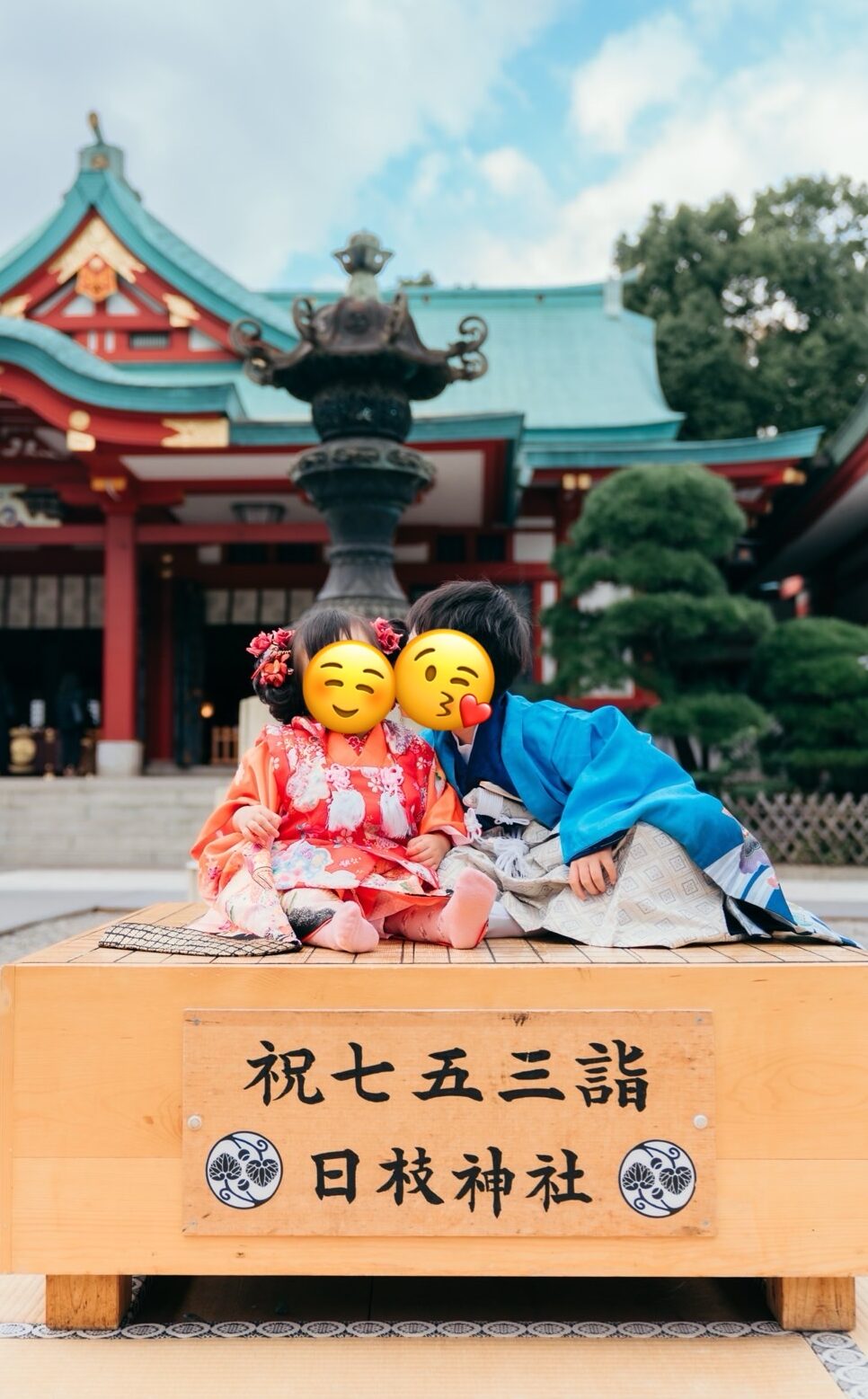
2. The Goban (碁盤) — Seasonal Highlight
During Shichi-Go-San season, a ceremonial stepping stone (goban) is placed in the grounds. Children traditionally step from the stone to symbolize a new stage of growth. This is a Shichi-Go-San exclusive — photograph it while you can.
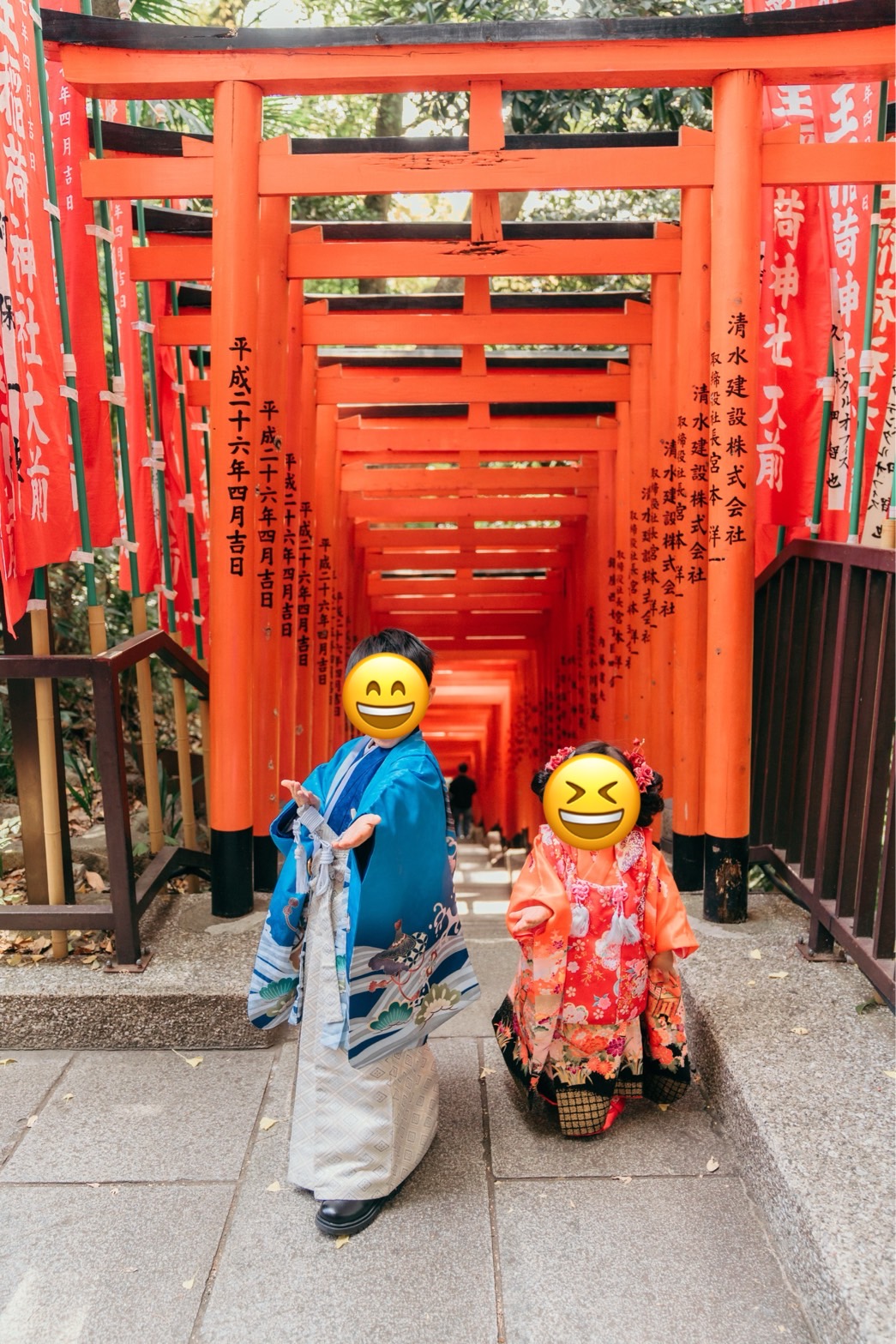
3. The Inari Pathway (稲荷参道)
A tunnel of small torii gates flanked by fox statues. The dappled light and red-orange gates make for striking photos at any time of day.
Sample Day Schedule
This timeline is based on a real November weekday visit with a single daughter (age 5), including an external photographer.
| Time | Activity |
|---|---|
| 10:00 | Arrive at Hie Shrine |
| 10:30 | Kimono dressing (at shrine or nearby) |
| 11:00–13:00 | Photography session with hired photographer |
| 11:20 | Submit ceremony registration at reception |
| 12:00 | Shichi-Go-San blessing ceremony (~30 min) |
| 12:30 | Additional photography in the shrine grounds |
| 13:00 | Celebratory lunch at Hoshigaoka (2-hour course) |
Note: If you’re using the Nagomi Plan, dressing and studio photography happen on-site, which simplifies logistics considerably.
Celebratory Lunch: Hoshigaoka at Capitol Hotel Tokyu
After the ceremony, a short 5-minute walk brings you to Hoshigaoka (星ヶ岡), the Chinese restaurant inside Capitol Hotel Tokyu.
- Cuisine: Cantonese / Chinese
- Weekday lunch: From ¥6,831 per person
- Private rooms available — ideal for families with young children in formal dress
- Bonus: The hotel also offered chitose-ame to the family — a lovely, unexpected touch that extended the festive mood
The combination of Hie Shrine and Hoshigaoka makes for a complete, polished Shichi-Go-San experience in central Tokyo without needing to travel far.
Practical Information
| Item | Details |
|---|---|
| Shrine name | Hie Shrine (日枝神社) |
| Location | 2-10-5 Nagatacho, Chiyoda-ku, Tokyo |
| Nearest station | Tameike-Sanno (5 min walk) / Akasaka (8 min walk) |
| Nagomi Plan | Weekday only, advance booking required |
| Nagomi Plan price (Nov) | ¥69,800 |
| Hatsuho-ryō | ¥10,000+ (cash only) |
| Best photo season | Early–mid November |
| Nearby lunch | Hoshigaoka, Capitol Hotel Tokyu (5 min walk) |
Tips for International Families
- Book the Nagomi Plan early if you want the convenience of on-site dressing and photography. November slots go quickly.
- Bring crisp cash for the hatsuho-ryō. ATMs are available at nearby convenience stores.
- Arrive early — ceremony slots fill up and waiting times can extend midday.
- Don’t skip the Inari pathway even if you’re running on a tight schedule. It takes 10 minutes and the photos are worth it.
- Children’s sandals (zori) are hard to walk in — bring a pair of easy shoes for between spots.
- The ceremony is conducted in Japanese — but the atmosphere, the music, and the moment itself speak for themselves. You don’t need to understand every word to feel it.
Planning More Time in Tokyo?
Hie Shrine is just the beginning. Arigato Travel offers immersive, locally guided food and culture tours across Tokyo — the kind of inside experience that guidebooks can’t give you.
This guide is based on a personal visit to Hie Shrine in November 2025. Pricing and plan availability are subject to change — please confirm directly with the shrine before booking.